
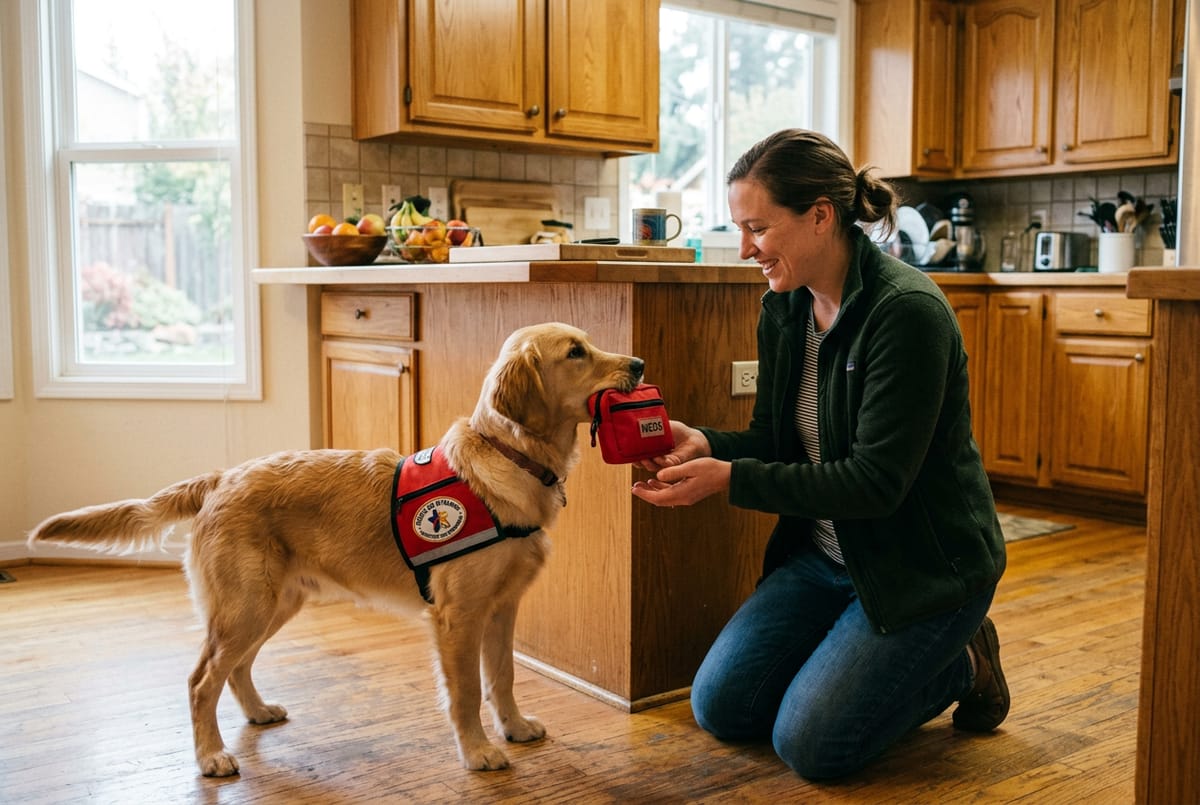
Short board-and-train
Drop the dog with us for a focused stay to work through a specific hurdle.
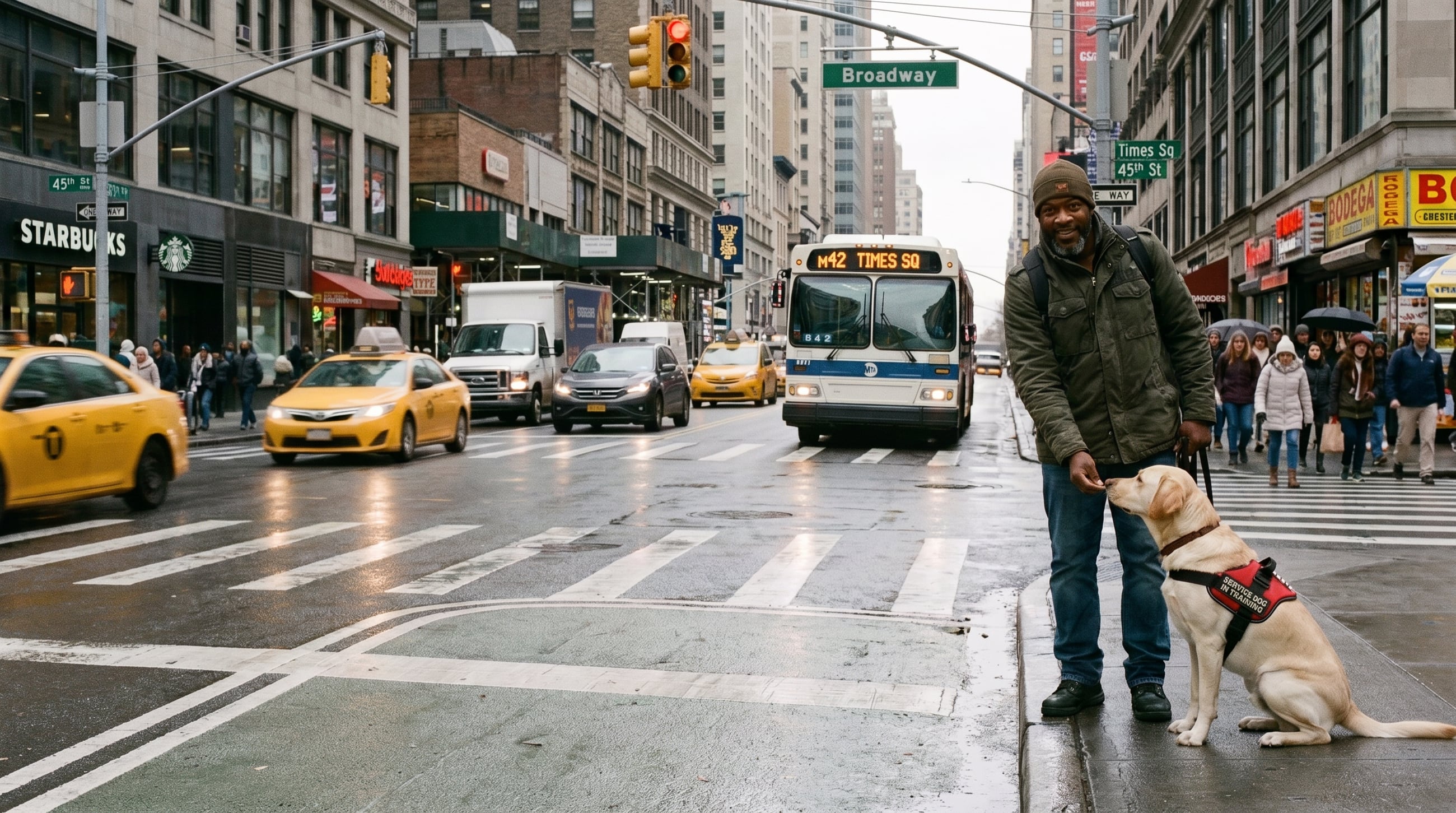
Foundations Program
Bring your own pup, or we’ll help you find a good candidate. Then we help you through the hard part — some of the most difficult stages, from puppy kindergarten to introducing public access. When you’re ready, we transition the dog fully to you and help you finish, with our coaches behind you the whole way inside our Service Dog School.
The middle path
A fully trained service dog is a big investment. Training your own from scratch is a different kind of investment — a real commitment of time and a lot of hands-on work. Foundations splits the difference across three clear stages: we help you find and source the right dog, we lay a rock-solid training base, and you finish it when your life and your skills are ready.
How it works
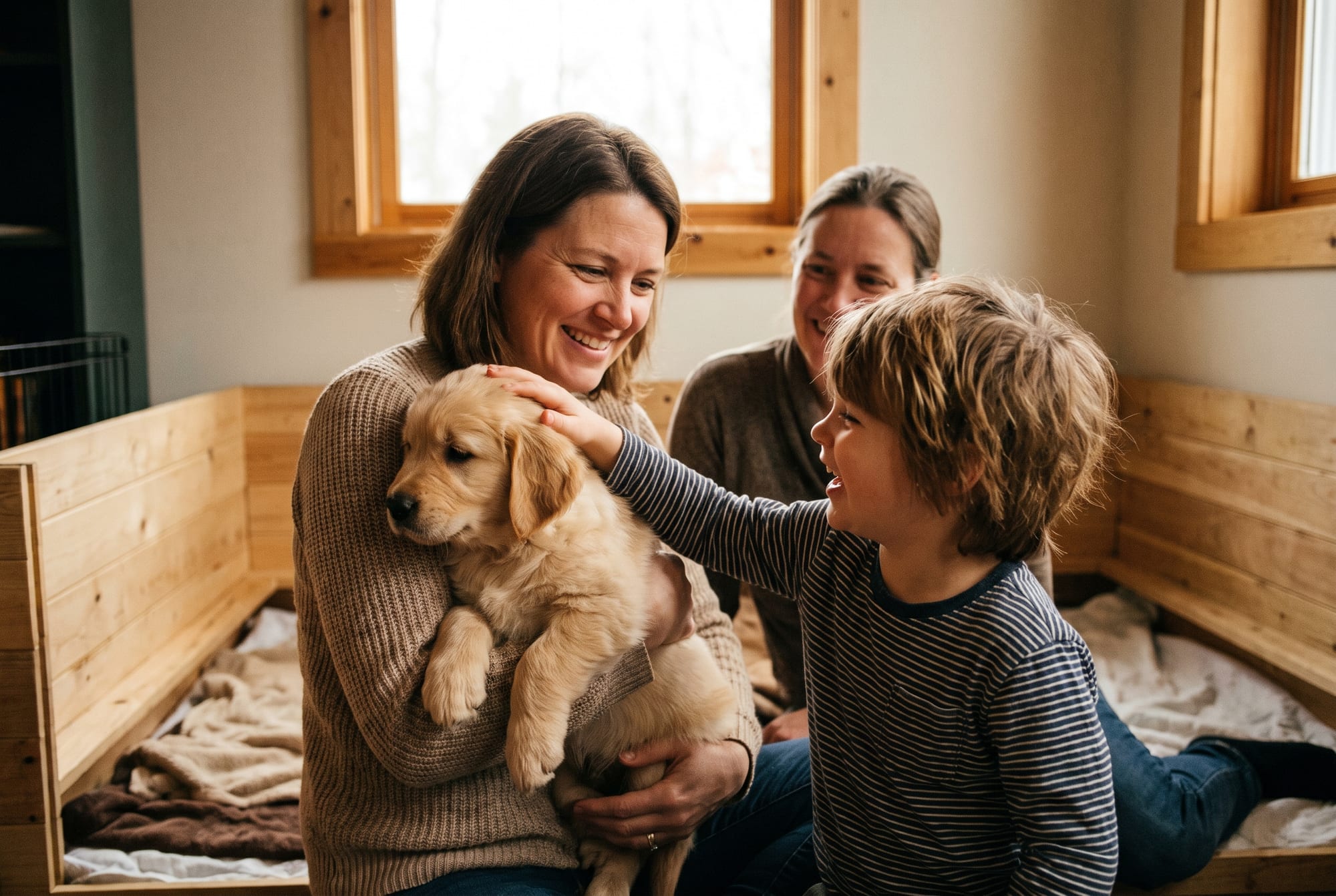
It starts with the dog. We help you find the right candidate — a puppy or a suitable adult dog — through our breeder network and ISDA partners, or by temperament-testing a dog you already have. Choosing the right personality and drive, and investing in a good-quality dog from good-quality lines, gives your dog the best chance of learning the work and doing it well. It’s worth getting right, and worth the investment, up front.
Your part in this stage you own the dog and its care
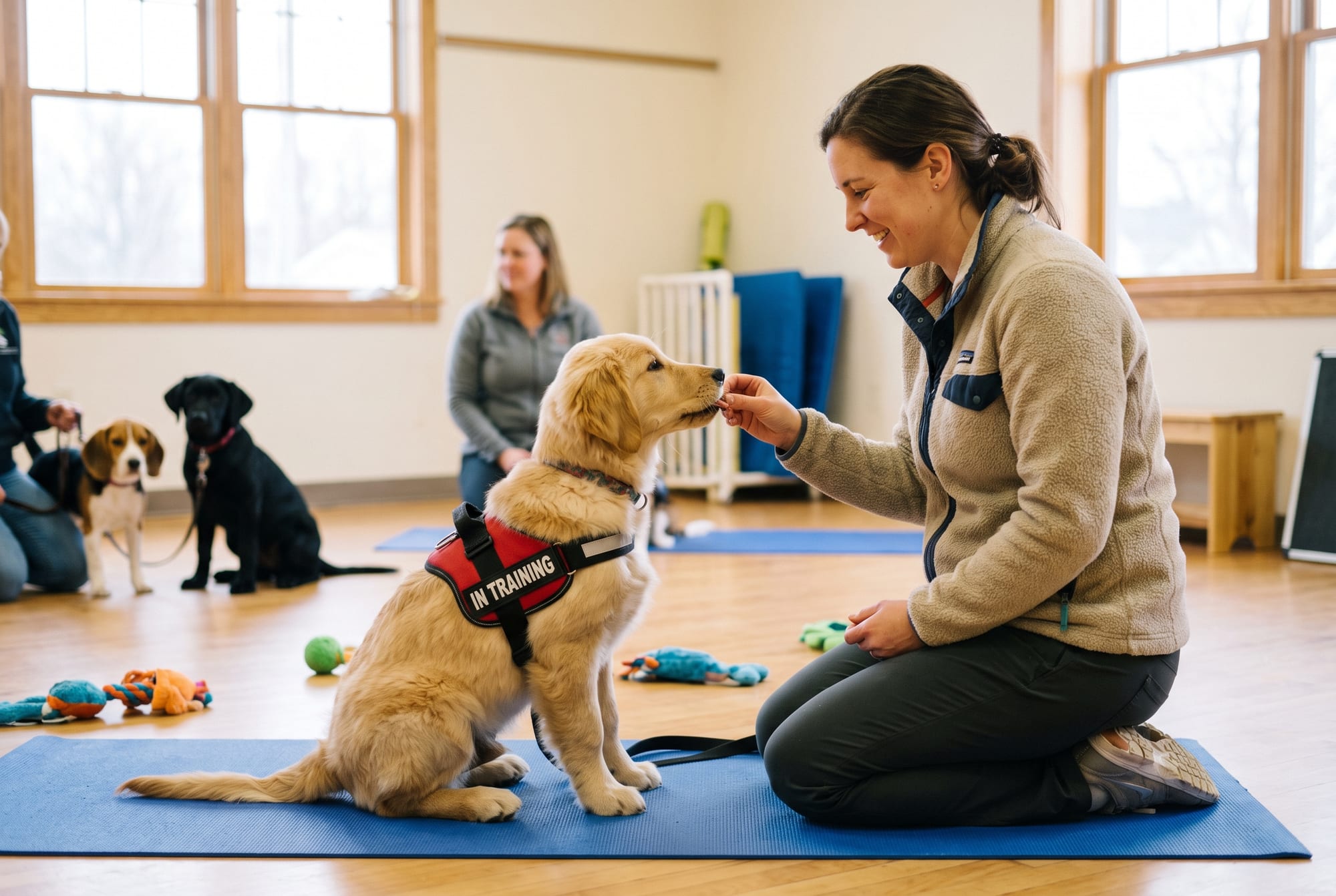
Your dog enters our training program. We start at the very beginning — puppy kindergarten and the basic foundational skills every service dog needs — then introduce real public-access work.
We keep building skills, experience, and training until the dog is ready for you to take over — based on your experience, your comfort, and your budget.
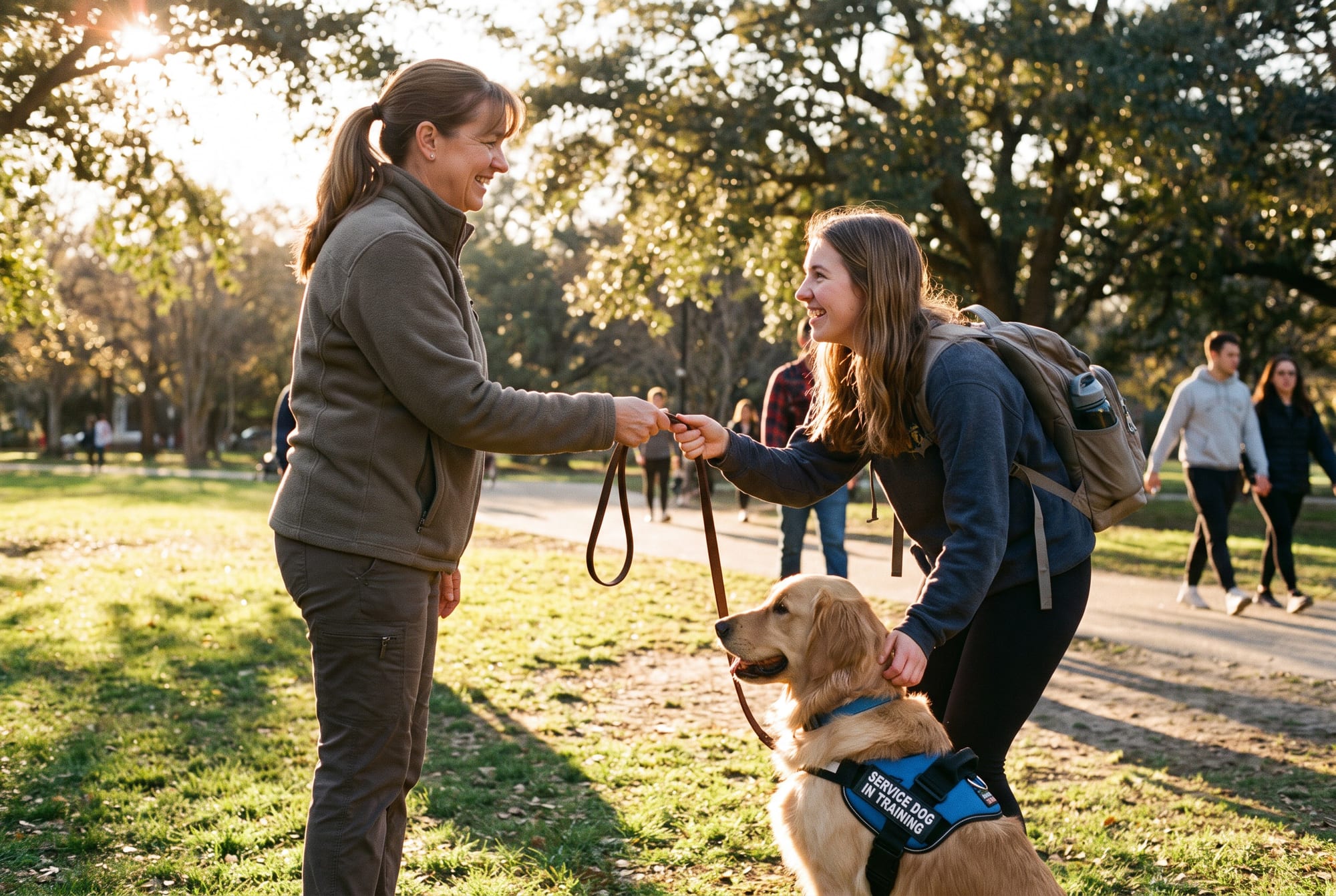
When you feel ready to take it the rest of the way, we hand the dog fully to you. You finish inside the Service Dog School — video modules, task libraries for your disability, on-demand coaching, and a 24/7 AI training assistant — at your pace, on your schedule.
You’re never on your own
Life changes, and dogs hit training hurdles. If you need a hand down the road — a new skill, a behavior that’s slipping, or a refinement for a change in your life — you can always come back. Add any of these à la carte, whenever you need them. We’re here for the long run, not just the handoff.
Drop the dog with us for a focused stay to work through a specific hurdle.
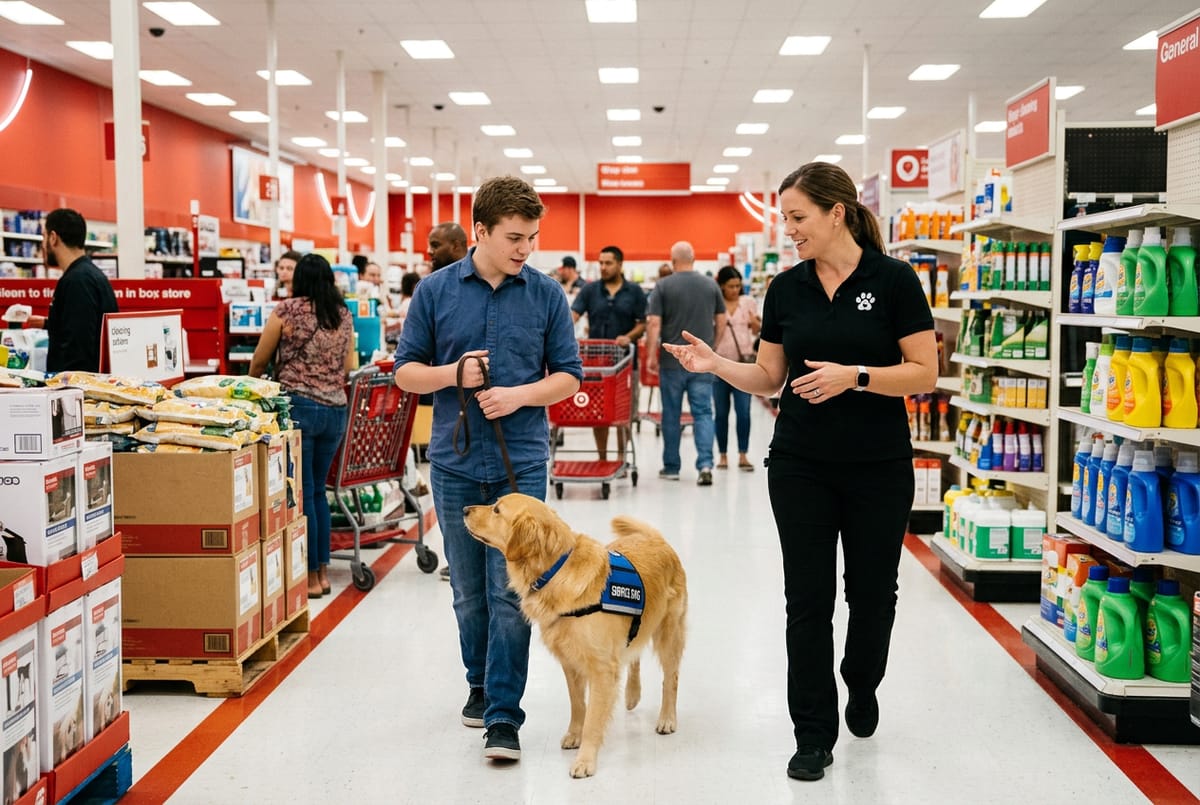
One-on-one sessions to sharpen a skill or fix a habit before it sticks.
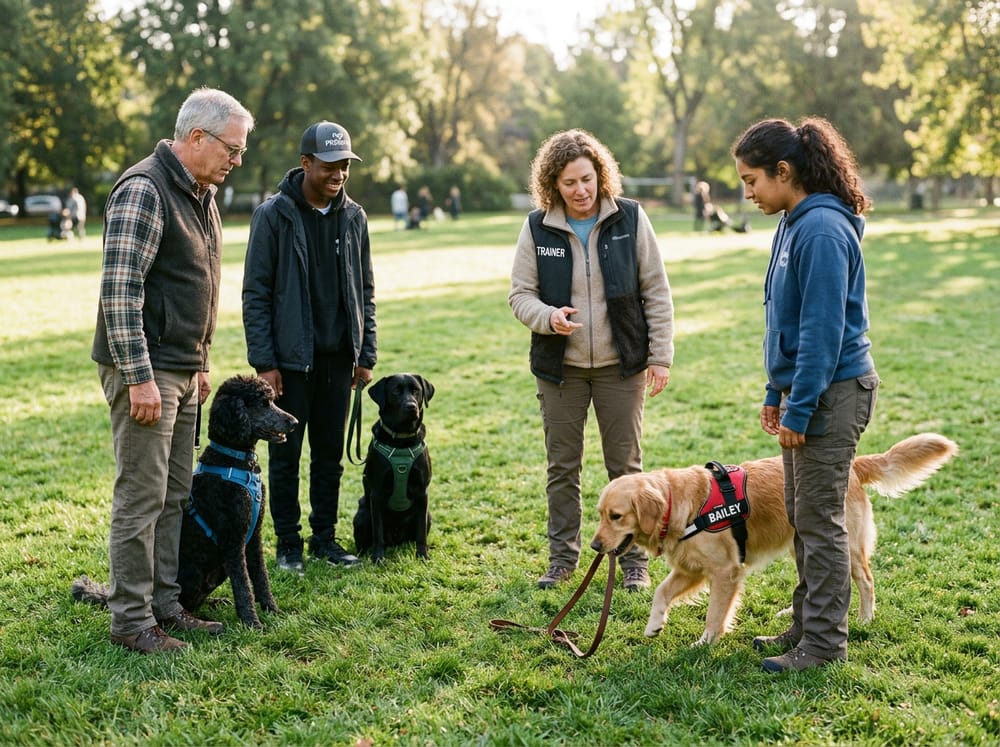
Immersive weekend intensives — real-world practice, proofing, and problem-solving with our trainers.
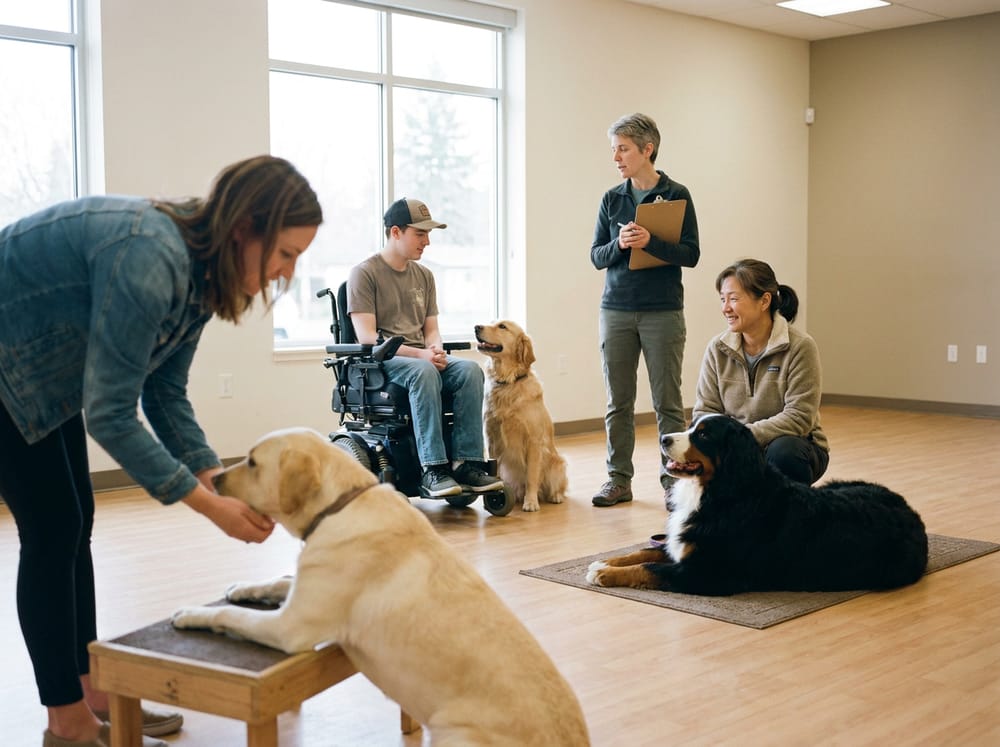
Train alongside a few other teams — guided practice, shared momentum, and built-in distractions.
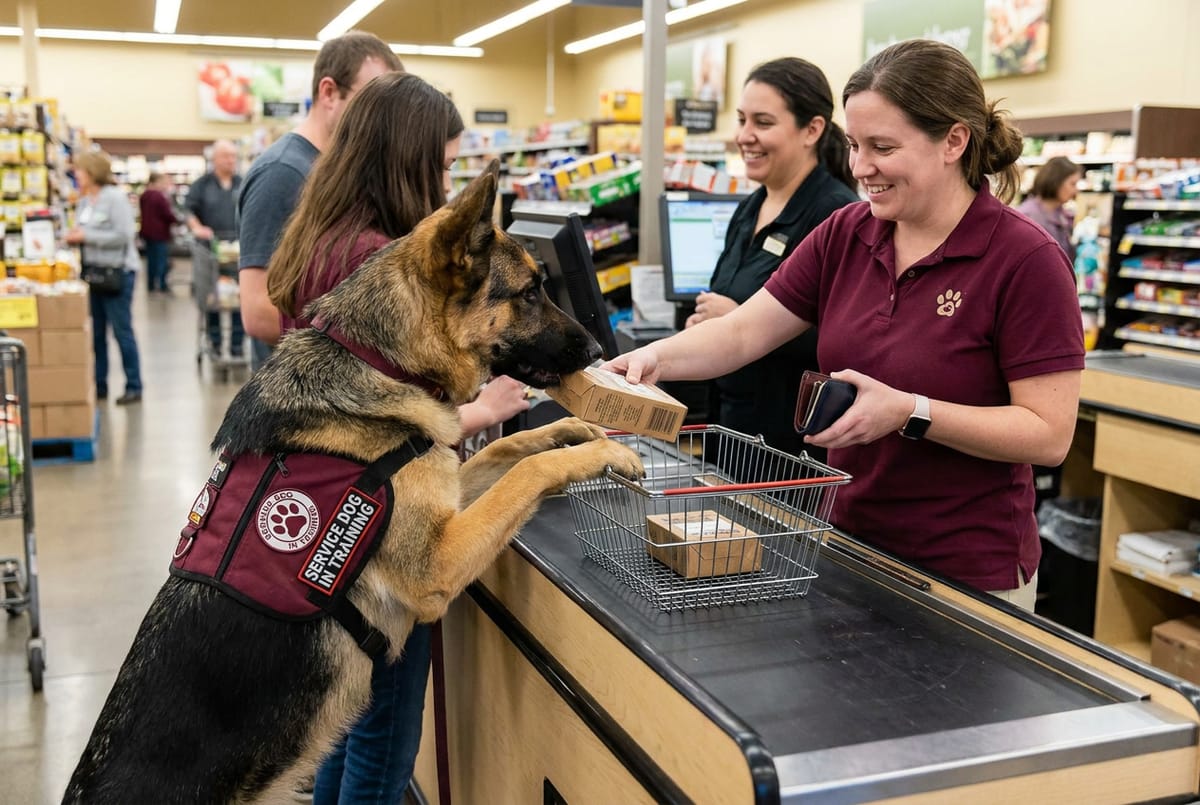
Tune-ups as your needs, your routine, or your dog’s work evolve over the years.
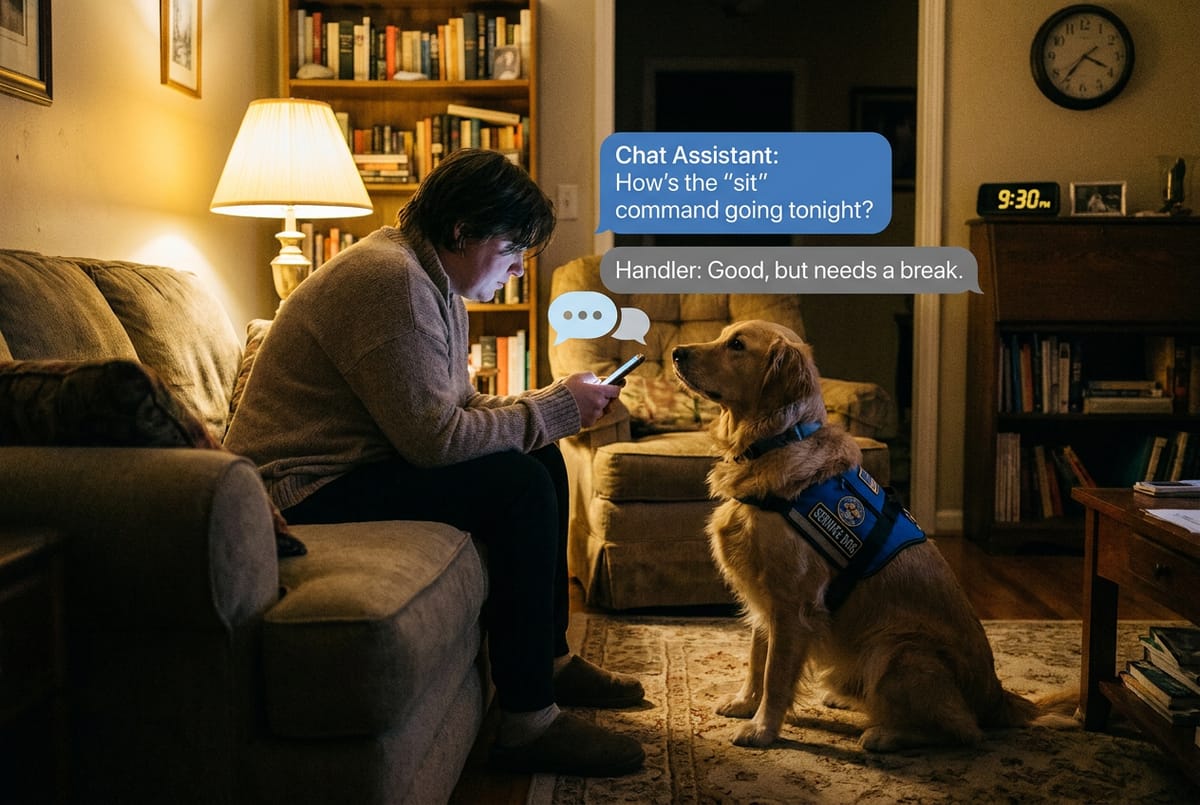
Stuck at 10 p.m.? Our AI assistant is tuned on 30+ years of our service-dog training — real help the moment you need it, even when a coach is offline.
What to expect
This path only works when everyone’s honest up front. For it to succeed, it’s important you know four things: what to expect, what’s required of us, what’s required of you, and the real time commitment success takes. Here’s the straight picture — tap any card for the detail.
Typically 4–6 months, and it varies with how fast the dog learns, your experience level, and your budget. By the end you should expect a dog with basic house manners that walks nicely on leash and is fully potty- and kennel-trained — though a few accidents are normal through the transition.
This covers the dog’s health, daily house-manner training, and focused skill work that has to happen every day to succeed. A rough day looks like 45 min exercise, 15 min grooming, 45–60 min play, 60–90 min training, and 30–45 min of house skills.
Most puppies don’t have the endurance or focus to do all that at once, and most people can’t set that much aside in one block. It’s meant to be spread across 10–20-minute sessions throughout the day — training through the commercial breaks of your favorite show.
Eight to ten months reflects the average time to maturity and work-ability — most service dogs are placed between 16 and 24 months of age, when they’re physically, mentally, and emotionally stable enough for the work. Like kids, dogs move through growth and development stages you can’t rush, no matter how much you want to.
It also depends on the time you invest up front. Put in the hours and the work and the dog learns faster; train only 15–20 minutes every other day and you’ll see less progress, sometimes regression. This is the average window to finish the basics, advanced training, disability-specific skills, and public-access prep.
Most clients spend between $12,000 and $20,000, depending on how much work they want us to do — always a trade-off of cost against time and quality. The more time we spend getting and refining the basics (core skills, work ethic, focus, working across environments), the easier the final training and task work is later.
The lower the budget, the more of that work falls to you — but by taking on the final stages yourself, you save a significant amount on our training time. This is on top of the puppy, vet care, and food you provide.
Public access certification
Before any team works in public, the dog has to prove it’s safe and unobtrusive out in the world. That standard is the Public Access Test (PAT), built on recognized industry criteria — a calm, controlled team that’s welcome anywhere.
We start the public-access work and generalize the base skills, then coach you toward the Public Access Test as you finish inside the Service Dog School.
Under the ADA there’s no legal certification required to have a service dog — but the PAT is the real-world bar we train every team to clear, because it’s what safe, confident public work actually looks like.
Where Foundations sits
If you’d rather we handle everything, that’s Premier. If you want to train your own from day one, the Service Dog School has your back the whole way. Foundations is the bridge — a professional training base, then a real partnership to help you carry it across the finish line.
| Compare the Paths | |||
|---|---|---|---|
| Who finds the dog | We do — we source and select the right puppy or suitable adult dog for you. | We help you find one — a puppy or an older candidate from our breeder network and ISDA partners, temperament-, drive-, and health-tested. | We help you find one — a puppy, an older candidate, a dog you already have, or one from a rescue. |
| Who does the training | We fully train the dog from start to placement. Add bootcamps and support periods afterward if you like. | We build the foundation and basic skills up to the point your budget and experience are comfortable transitioning the dog to you. Private lessons, board-and-train, and bootcamps available à la carte. | Total do-it-yourself — you do the sourcing, training, and care with our curriculum and Mentorship support. À la carte options like private workshop weekends, bootcamps, and public-access testing are available. |
| Public-access work | Fully trained by us before placement across the common environments a working team faces. We can't prepare for every situation, but we give the dog a strong base to adapt from. | We start it — basic environmental exposure and generalizing the base skills to everyday situations, enough to get you started safely and confidently; you expand it in the Service Dog School. | You do all the training and environmental exposure, step by step, with our modules and guidance. |
| Your time investment | ~100–150 hrs of study, training meetings, and the optional bootcamp/PAT at placement — plus daily practice (30–45 min) after. | ~450–600 hrs over 8–10 months. | 1,000–1,200 hrs over 14–16 months. |
| Average timeline | Typically 12–16 months to placement-ready. | 4–6 months of foundation, then 8–10 months for your finishing. | 16–18 months at your pace, depending on the effort you put in. |
| Where it happens | Our home, facility, and the real world. Ideally your dog visits your home at stages (1–4 nights) to build the bond; then we come to you for a one-on-one bootcamp in your home, work, and therapeutic settings. | Same as Premier, minus the bootcamp — though the transition itself happens in your own home. | Your own home and real public settings wherever you go. The program and support are online unless you add services. |
| Cost range | Each dog is custom-selected and trained, so it varies. By consultation and proposal — typically $46,000–$50,000 base with all components, options, and equipment. | $12,000–$20,000, plus the puppy, travel, vet, and food costs. By consultation. | $699 + tax, plus the $1,800 Mentorship program (built to work together), plus any à la carte options. |
| Best for | Families without the bandwidth or experience to train, who value a customized approach, hands-on assistance, and individualized support. | Hands-on families on a budget who want a professional training base and the support to carry it across the finish line. | Self-directed trainers on a tighter budget, or those with dog-training experience who like learning new skills. |
Talk it through on a free call — no pressure, no sales pitch, no obligation. We’ll be honest about whether this is the right path for your household.