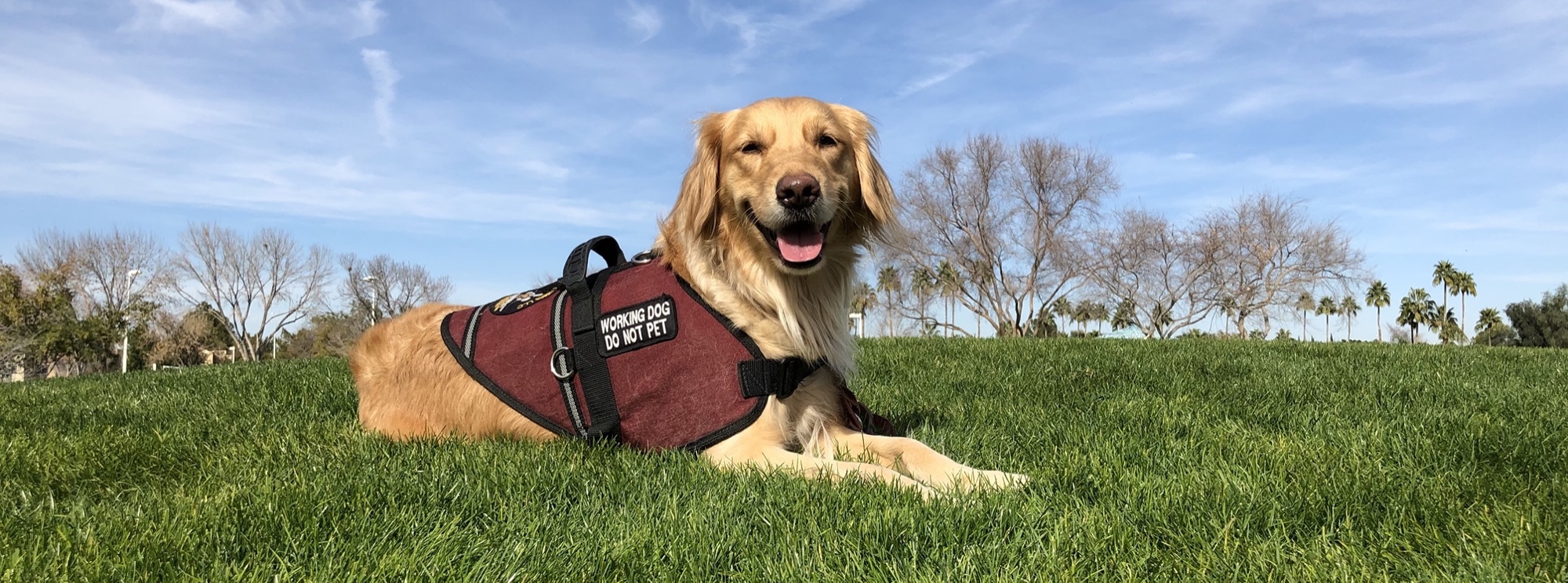
Arizona Goldens Training service dogs worldwide since 2006
We Provide Custom Trained Service Dogs That Change Lives
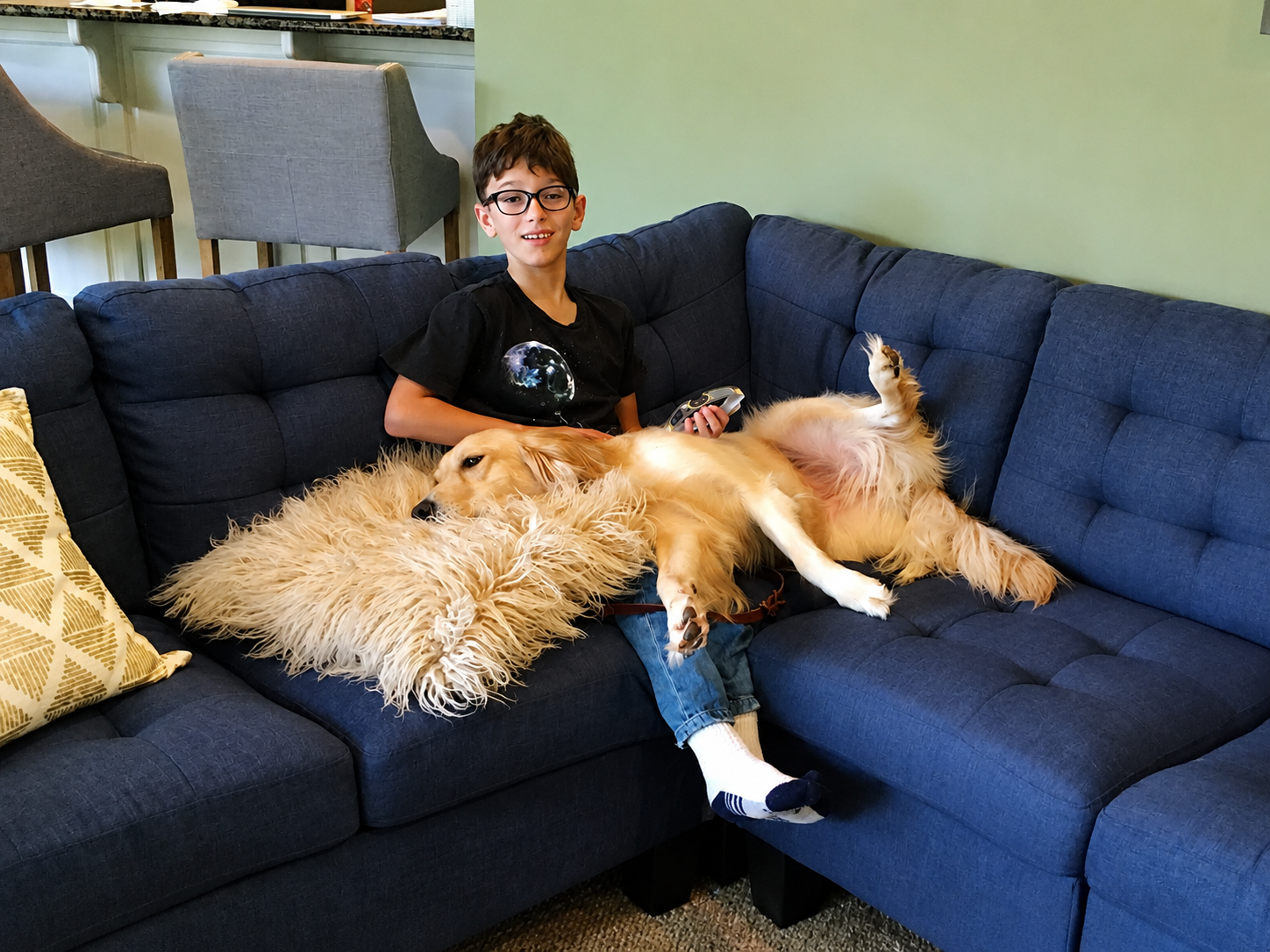
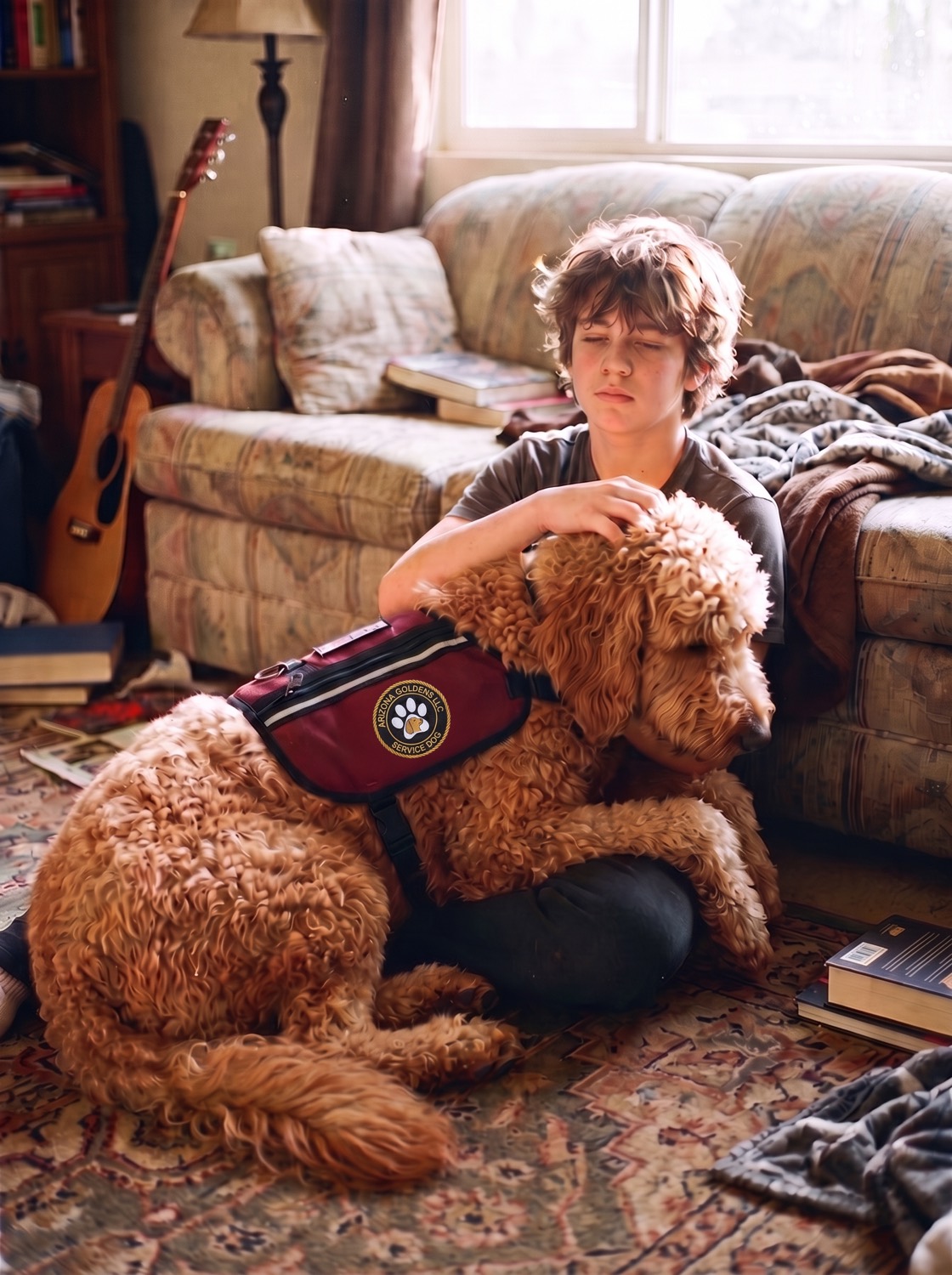
Whether it’s for you or your child, your service dog is custom trained for the daily tasks your disability makes hardest. You’re in the process the whole way, so what comes home is a partner you already know.
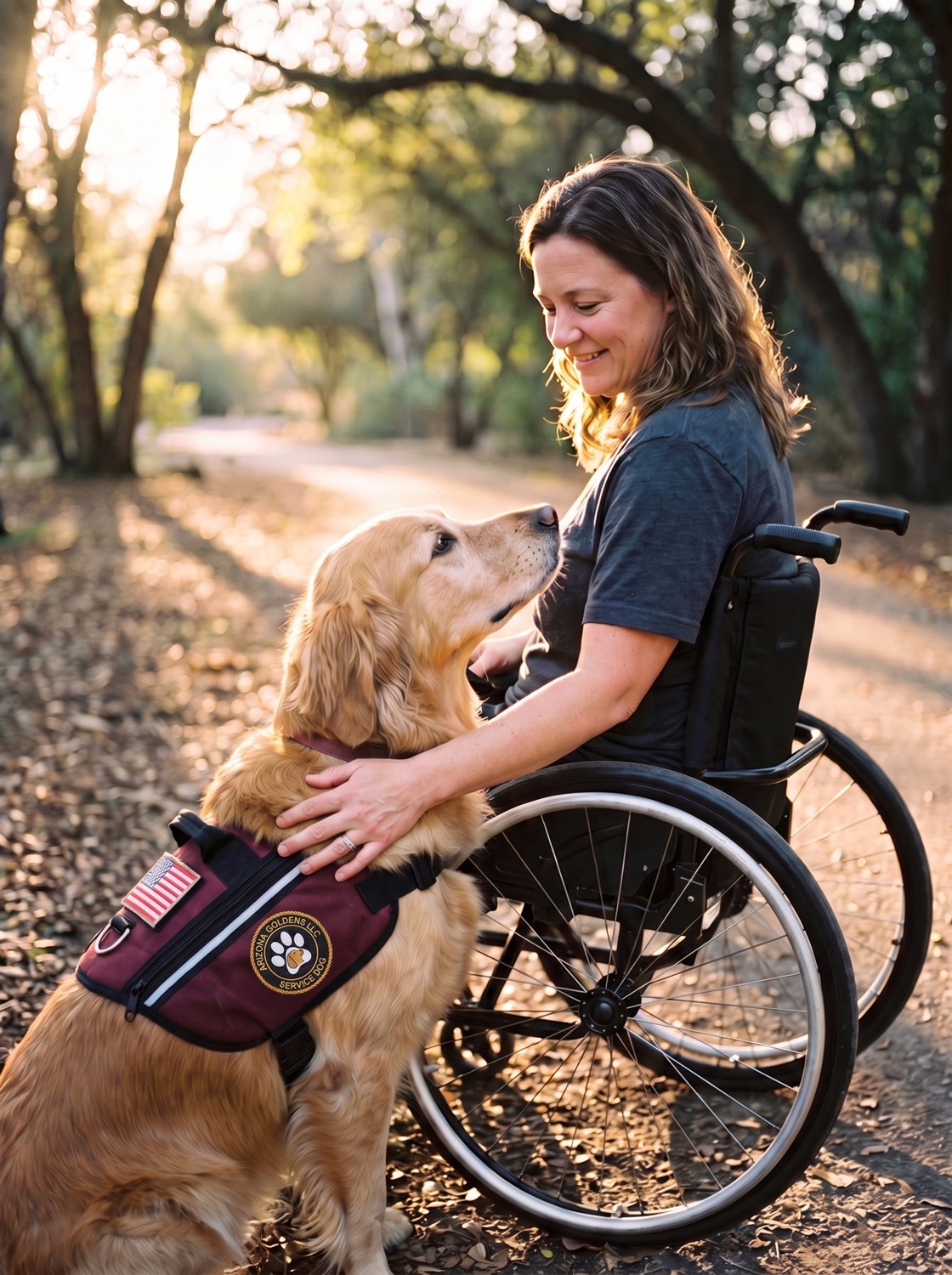
These are the nine kinds of service dogs we train — each one taught the specific tasks that answer your disability, not a catalog of tricks. Most teams are trained around a single disability; when you’re managing more than one, a dual-trained dog can carry both.
There Isn’t a Best Program. There’s a Best One for You.
The paths sit on a spectrum trading investment for hands-on involvement — on one end we do almost everything, on the other you do most of it with our curriculum and coaches behind you.
01
12–14 mo to placement / 1,200+ build hours / Bootcamp at your home
Premier Program
The flagship, fully trained path. We help you find the right puppy or older dog, then train it specifically for you over 12–14 months, with you involved along the way — and most families add our bootcamp transition at home, built around your schedule, household, and disability, to International Service Dog Alliance standards throughout.
It minimizes your time investment, but doesn’t remove it: expect roughly 100–150 hours, plus six to nine months of daily practice after placement before things truly click. In-Home Interview required.
4–6 mo foundation with us / We help you find the dog / You finish · We coach
Foundations Program
The middle path many families end up preferring. We build the foundation — solid obedience, task introduction tied to your disability, real public access work — then you finish inside the Service Dog School with our coaches behind you.
We’ll help source a dog through our breeder network and ISDA partner programs, or temperament-test the dog you have. Refresher training, board-and-train, and coaching stay available after.
Start immediately · No waitlist / 60–90 min per day / 800–1,500+ hrs at your pace
The Service Dog School
The most accessible path: train your own service dog with our methodology behind you. One-time purchase — full video modules on every core topic, complete task libraries built around your specific disability, step-by-step command instruction, cross-training built in.
There’s no shortcut. What there is, is a proven system built by trainers who’ve placed hundreds of service dogs.
Add-on to any path · Coaching, community & a 24/7 AI assistant
Mentorship Program
A custom training plan built from a lifestyle, personality & needs assessment · on-demand chat with a training specialist · a 24/7 AI Training Assistant built on our entire knowledge base · monthly live coaching calls · quarterly disability-specific workshops · a 1:1 onboarding session.
“Whichever program you came in through, you’re never doing this alone.” Also on the bench — board-and-train weeks, basic boarding in a home environment, private 1:1 coaching, in-person & virtual workshops.
The Service Dog School is a flat, one-time price — start today, no waitlist. Premier & Foundations vary by dog and disability, so we’d rather walk you through those honestly on a free call than pin a number to a page.
“The staff and trainers seemed willing to want to work with us and sought us out to give us info every time I asked my many questions. I knew AZG cared for their dogs and the families they worked with.”
“Brian was so patient with us as we worked to raise our funds privately. Once bootcamp started, I realized the level of professionalism that AZG provided.”
“The trainer for our dog clearly cared deeply for her and she made sure we knew exactly what our new service dog needed to perform at her best.”
LeeAnn · Mother of a client
Chapter 03 · Measured, studied, lived
The Proof
No miracle claims. Just nearly two decades of teams, and research that keeps agreeing with them.
Scroll for the numbers
2006
Training service dogs since
300+
Teams worldwide · US to Australia
1,200+
Hours in a fully trained dog
66%
Lower odds of PTSD diagnosis*
Field data
*2024 NIH-funded study: veterans partnered with a service dog showed 66% lower odds of a PTSD diagnosis after three months versus a waitlist control — anxiety and depression down, quality of life up.
Autism research: children sleeping better, fewer meltdowns, less self-injurious behavior — and lower stress-hormone levels in both kids and parents.
Mobility & medical-alert studies: measurable gains in independence and big drops in weekly paid caregiver hours.
Field report
A Marine with PTSD whose world had shrunk, matched with a dog trained to block crowding strangers and deliver deep pressure therapy. The first real test: nine-plus hours at Universal Studios with his family. Not a miracle. Not a cure. A real working partnership that gave a father his family back.
Chapter 04 · The training journey · Six stops, no shortcuts
The Journey
“You can’t rush a puppy through adolescence any more than you can rush a teenager into adulthood.” Six stops. No shortcuts. Scroll to travel.
01 / 06
01
01
Puppy Kindergarten
Dog’s approximate age · 8 weeks–4 months
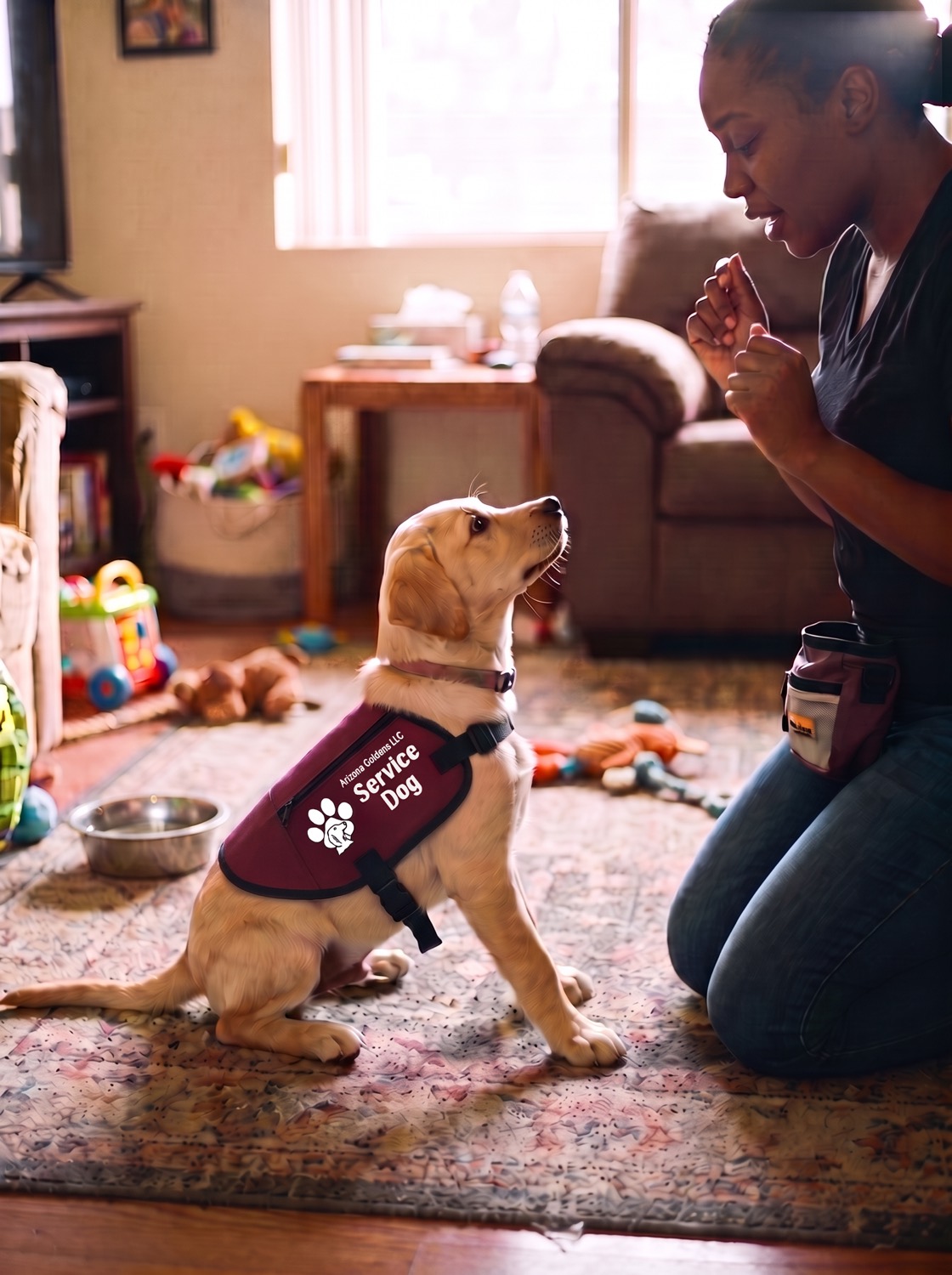
Your puppy comes home a blank slate — everything to build. Almost all of it happens indoors or in the backyard: they don’t have all their shots yet, so most places aren’t safe. Early socialization is worth a lot, but you’ll have to carry them through a store or use a stroller for it. This stage teaches your pup how to communicate with you, builds the work ethic, and covers basic manners, housebreaking, crate training and the core skills — sit, down, come, here. It’s also when the canine-human bond forms — the reason a service dog will want to work for you at all.
02
Basic Foundations
Dog’s approximate age · 5–11 months
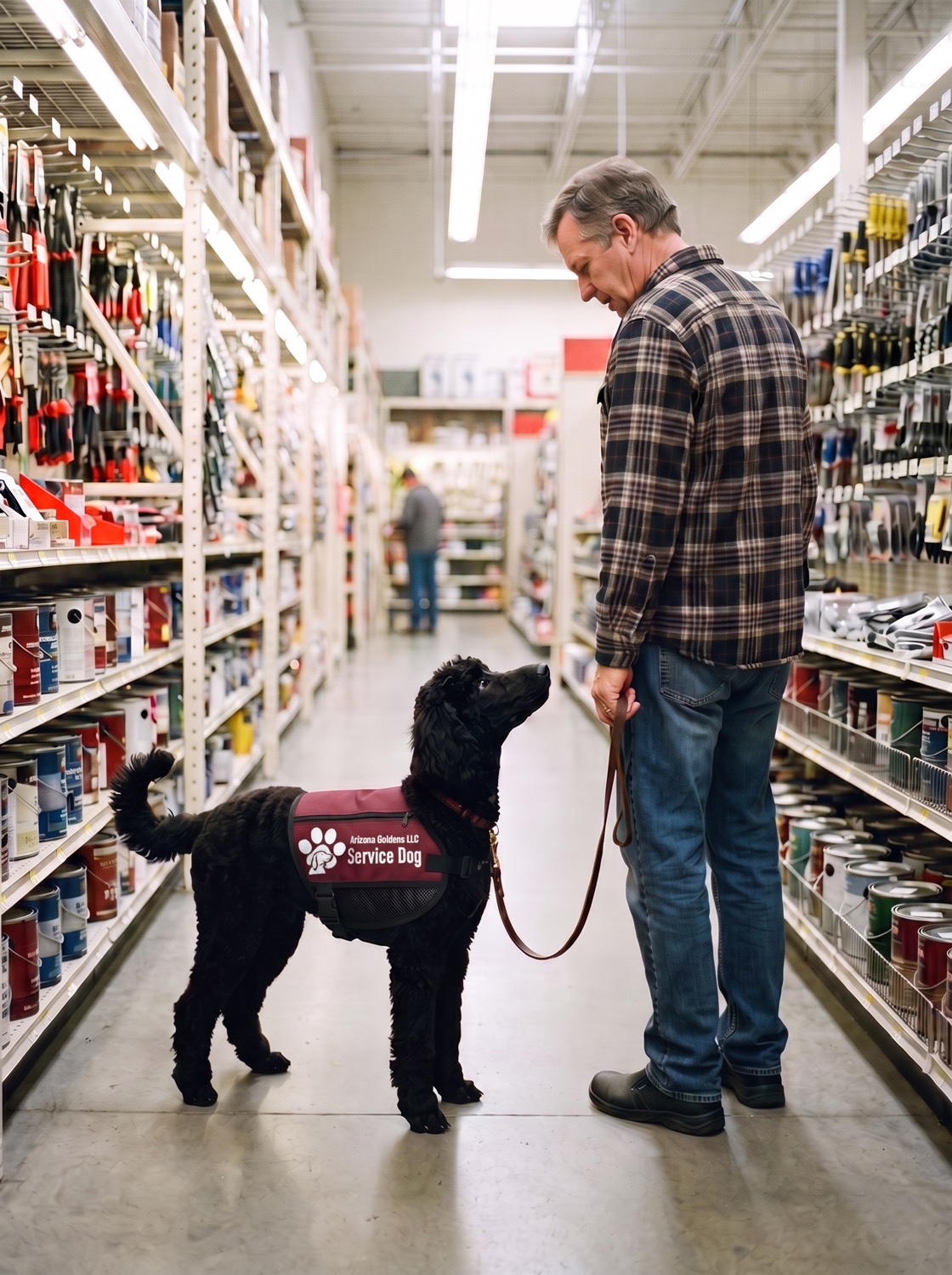
Now their world expands, and that’s the whole point. Take them to as many new places and situations as you can over these months — quiet, low-traffic stores first, then busier and more complicated ones. Every unfamiliar floor surface, noise and stranger teaches the same lesson: the world is safe, and work happens anywhere. Around fifty percent reliability is exactly where a dog this age should be. Alongside all of it you’re teaching the forty to fifty core commands that become the building blocks for advanced training and, later, the disability-specific work.
03
Advanced Training
Dog’s approximate age · 11–14 months
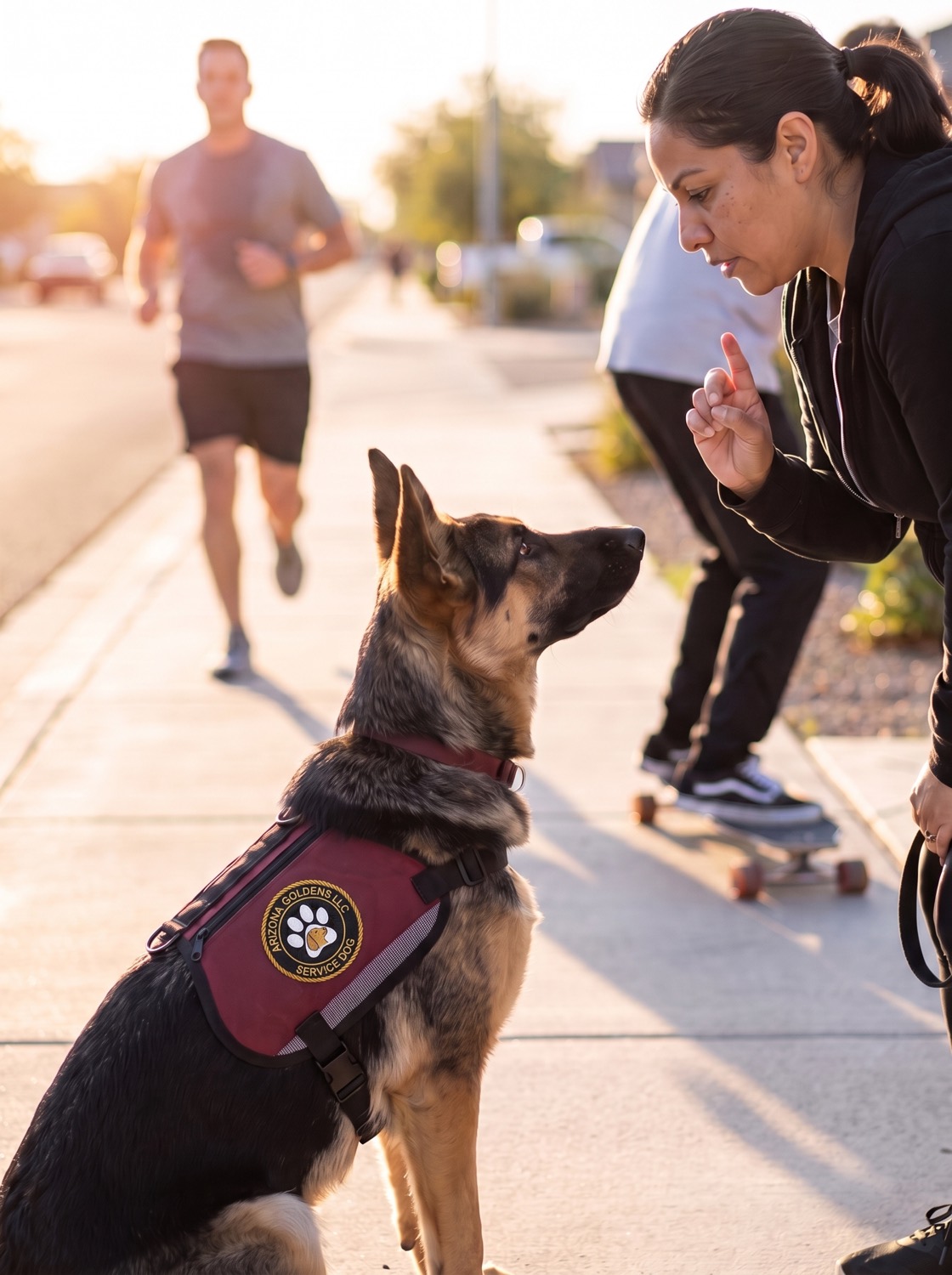
This is where single commands start joining into sequences. Your dog learns to chain behaviors together, to work a problem through instead of waiting to be told every step, and to begin the recognition-and-response process — noticing something has changed, then acting on it. Environments get harder too: busier, louder, less predictable. Adolescence lands here as well; some dogs move through a fear stage, others get testy and independent. How it’s handled decides a great deal. The right techniques carry a dog into their full potential — mishandled, this is the stage where most service dogs wash out. Full medical clearances are done now too, confirming they’re developing correctly and can take the physical demands of the work.
04
Disability-Specific Training
Dog’s approximate age · 14–18 months
Everything now assembles into the tasks built around your disability — alerting, deep pressure, retrieval, mobility support, interruption, grounding — while the core commands you depend on climb toward eighty percent in the public places you actually go. This is complex work, and it takes longer again if your dog is being dual-trained for more than one disability. They have to recognize a situation and respond independently, make the crucial calls on their own, learn the nuances of how you actually live — and then generalize all of it across the real environments and situations the two of you will meet. It’s the hardest thing we ask of a dog, and it can’t be rushed.
05
Placement & Transitioning
Dog’s approximate age · 18 months onward
Three things happen at this stage.
First — the dog transitions from us to you, and so do the daily responsibilities: handling, care, routine and upkeep. In Premier that comes at the end; in Foundations, earlier — whenever you’re ready to finish the training through the Service Dog School.
Second — we make that transition smoother, with as much or as little support as you want. A boot camp runs five to fourteen days, depending on your budget and how far along you already are.
Third — we prepare you both for working together day to day, out in public, and passing the public access test. And training doesn’t end here; it carries on for years.
06
Public Access Test & Certification
Dog’s approximate age · Varies
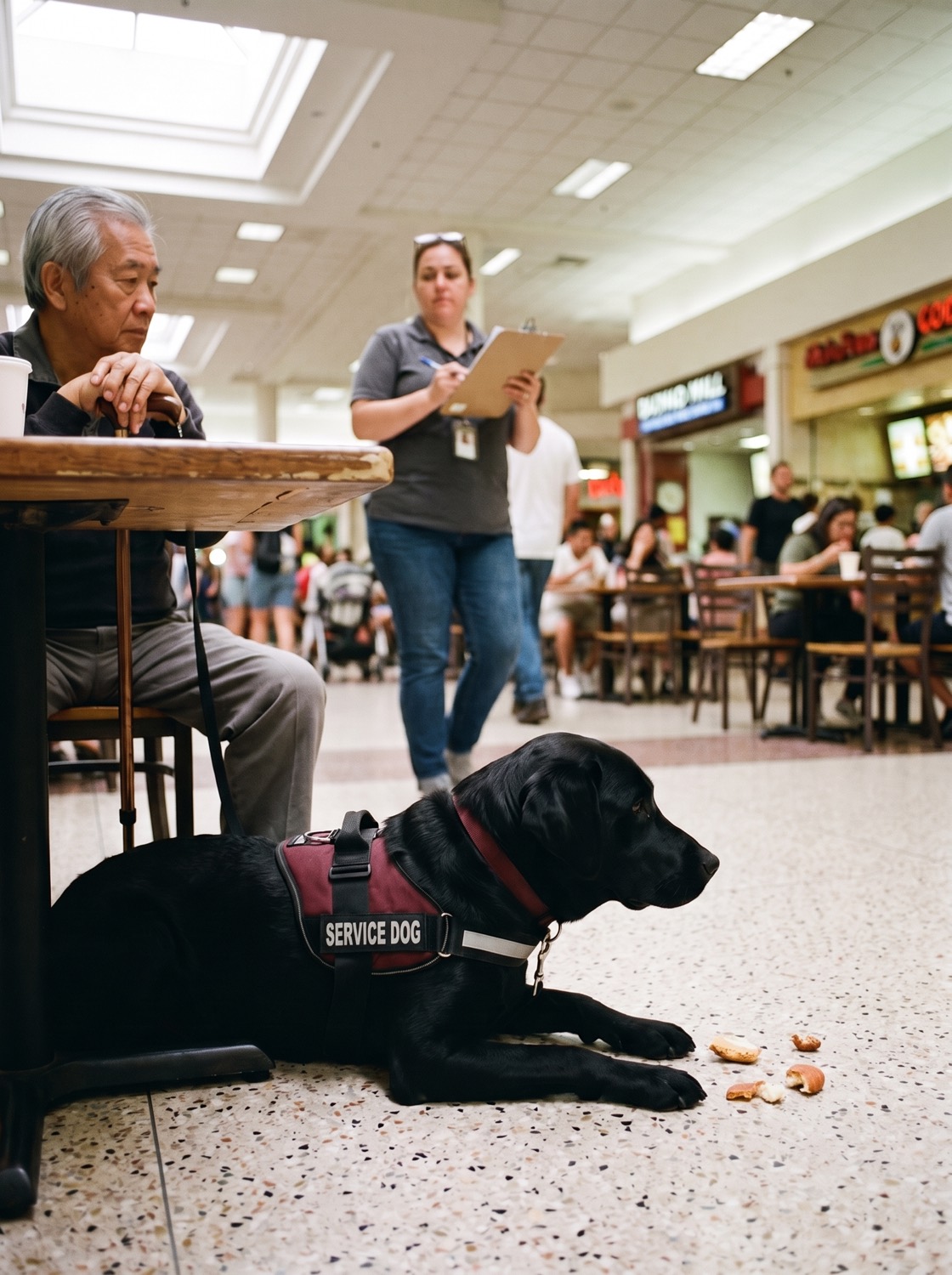
Certification comes in two parts. The written test covers what you’ve been studying online while we trained your dog: how they were trained, how to care for them, service dog law, and your program’s requirements. The second is a practical evaluation in a real public place — a mall or shopping center — with up to two hours to complete every requirement, where an evaluator documents that you handle your dog safely and that they perform your tasks. No U.S. law requires this. It matters anyway: in an access dispute, if your dog goes to school, and for your rights under Title I at work.
The End of the Road
A Certified Service Dog Team
Premier, Foundations, or the Service Dog School — every path ends in the same place: a dog trained to help you overcome your disability in everyday life. And you don’t finish alone. You leave with the skills to keep building, and with us behind you — now and years from now. That’s what turns a certified team into one of the best out there.
Task library — Alerting · Deep pressure · Retrieval · Mobility support · Interruption · Grounding · Cross-training · Public access work · Alerting · Deep pressure · Retrieval · Mobility support · Interruption · Grounding · Cross-training · Public access work · Task library — Alerting · Deep pressure · Retrieval · Mobility support · Interruption · Grounding · Cross-training · Public access work · Alerting · Deep pressure · Retrieval · Mobility support · Interruption · Grounding · Cross-training · Public access work ·
Ignition · The intake sequence
Getting Started
No pressure, no sales pitch, no obligation. We’d rather educate you than sell you — this is a working session from the first call.
Step 01 · Free
20-Minute Initial Consultation
Phone or Zoom with an experienced Service Dog Coach. Questions answered, path sketched.
Step 02
Comprehensive Service Dog Assessment
An in-depth evaluation of lifestyle, personality, and disability profile — breed, temperament, drive level, tasks, program fit. Where every training plan starts.
Step 03
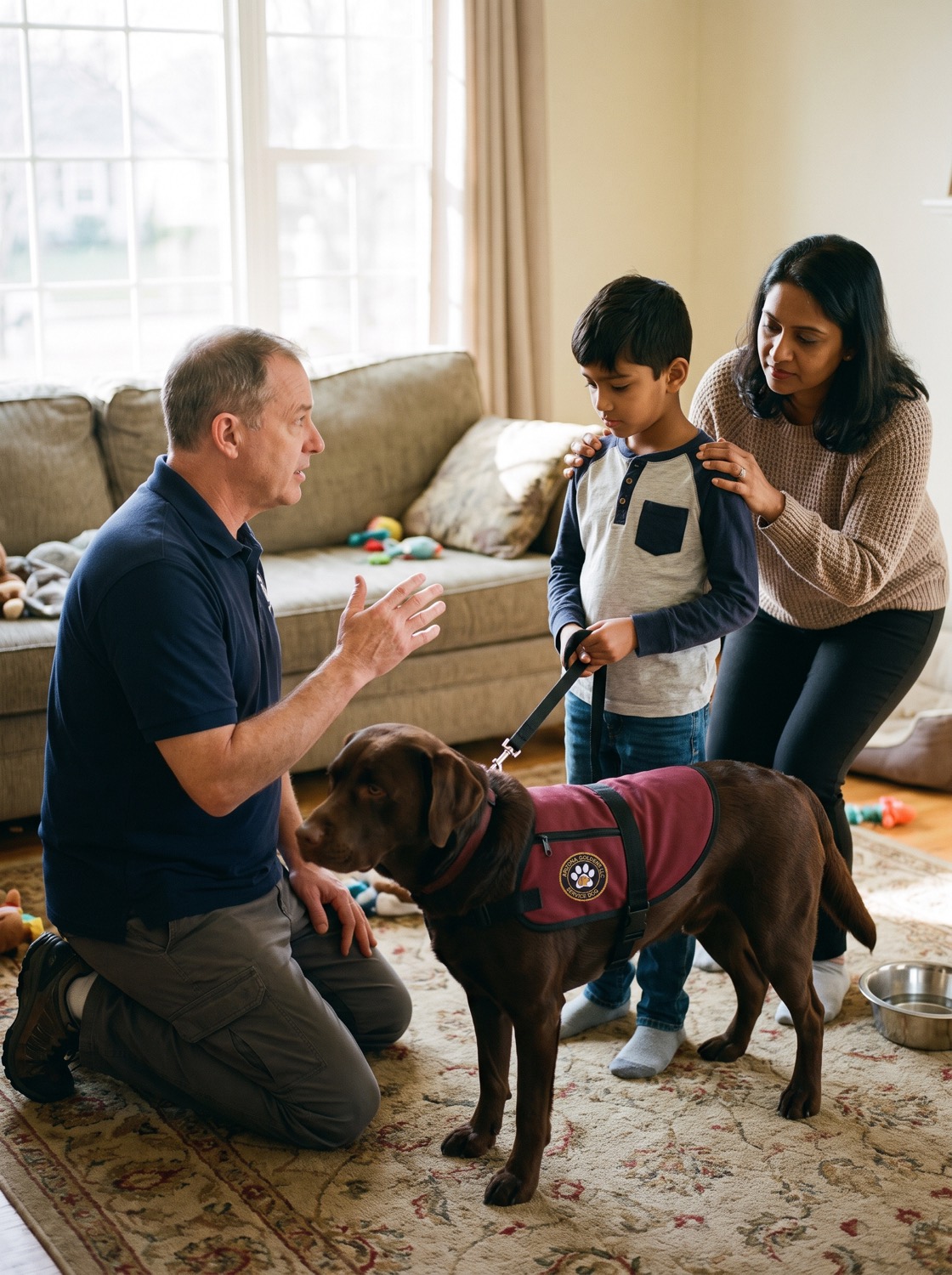
In-Home Interview
A trainer and a pup-in-training come to your home for 60–90 minutes. A working session, not a sales visit. Optional for most; required for Premier.
Step 04
Choose Your Program & Begin
The Service Dog School can start immediately — no waitlist. Premier and Foundations begin as your match comes together.
Final chapter · Yours
Commission Your Partner
Twenty minutes, one honest conversation. We don’t just train the dog — we train you.